Photo by ANIRUDH on Unsplash
What are Stem Cells?
Stem cells are undifferentiated cells with the unique ability to develop into various specialised cell types. They are the building blocks of the body, playing a crucial role in development, growth, and tissue repair. There are two main types of stem cells: embryonic stem cells and adult (or somatic) stem cells.
Embryonic Stem Cells
Embryonic Stem Cells (ESCs) are the cells derived from embryos, typically at the blastocyst stage. ESCs have the potential to differentiate into any cell type in the human body. This pluripotency makes them valuable for scientific and medical research. However, the use of embryonic stem cells is ethically controversial because their extraction involves the destruction of embryos.
Adult (Somatic) Stem Cells
Adult (Somatic) Stem Cells are cells are found in various tissues throughout the body, incluing cord blood and cord tissue, which are involved in tissue maintenance, repair, and regeneration. Adult stem cells are multipotent, meaning they can differentiate into a limited range of cell types specific to the tissue in which they are found. For example, hematopoietic stem cells can give rise to various blood cell types. Interestingly, Adult (Somatic) Stem Cells can be found in small quantities in menstrual fluid, teeth and hair.
Unique Characteristics
Stem cells have several unique characteristics.
Self-renewal
Stem cells can divide and produce identical daughter cells, maintaining the stem cell population.
Differentiation
Stem cells can differentiate into specialised cell types with specific functions. This process is regulated by various signals from the surrounding environment.
Plasticity
Some stem cells exhibit plasticity, meaning they can differentiate into cell types outside their tissue of origin. This property holds promise for regenerative medicine.
The field of stem cell research has significant implications for medicine and has led to the development of potential new therapies.
Regenerative Medicine
Stem cells can be used to repair or replace damaged tissues and organs. For example, they have the potential to treat conditions like heart disease, diabetes, and spinal cord injuries.
Drug Testing and Development
Stem cells can be used to test new drugs for safety and efficacy. They provide a model system for studying diseases and understanding cellular processes.
Understanding Developmental Processes
Studying stem cells helps researchers understand the complex processes of embryonic development and tissue formation.
Induced Pluripotent Stem Cells
While stem cell research holds great promise, it also raises ethical concerns, particularly in the use of embryonic stem cells. However, advances in reprogramming techniques, such as induced pluripotent stem cells (iPSCs), have provided alternatives that do not involve the use of embryos. iPSCs are adult cells that have been reprogrammed to have embryonic stem cell-like properties. This has opened up new possibilities for studying and using stem cells in a more ethically acceptable manner.
Induced pluripotent stem cells (iPSCs) are generated by reprogramming adult cells. The discovery of iPSCs represents a significant breakthrough in stem cell research, as it allows scientists to create pluripotent stem cells without using embryos, addressing some ethical concerns associated with embryonic stem cells.
iPSCs are created through a process called cellular reprogramming. This involves the introduction of specific genes (often Oct4, Sox2, Klf4, and c-Myc, known as Yamanaka factors) into adult cells, typically obtained from skin or blood samples. These genes induce a reprogramming of the cell, resetting it to a more embryonic-like state.
Similar to embryonic stem cells (ESCs), iPSCs are pluripotent, meaning they have the ability to differentiate into cells of all three germ layers: endoderm, mesoderm, and ectoderm. This gives iPSCs the potential to become virtually any cell type in the human body. iPSCs have significant implications for regenerative medicine, disease modeling, and drug development. They offer the possibility of creating patient-specific stem cells for transplantation therapies, studying diseases in a dish through the creation of disease-specific cell lines, and testing the efficacy and safety of new drugs.
One of the major advantages of iPSCs is that they can be derived from the patient’s own cells, reducing the risk of immune rejection when these cells are used for transplantation. This personalised approach is especially valuable in the context of developing therapies tailored to an individual’s genetic makeup.
Despite their potential, iPSCs present challenges, including the risk of tumour genesis (formation of tumours) due to the reprogramming process. Researchers are working on refining the reprogramming techniques and understanding the characteristics of iPSCs to address these challenges.
iPSC technology has opened up new possibilities in the field of regenerative medicine and has become a powerful tool for studying diseases and developing novel treatments. However, it’s important to note that while iPSCs have shown great promise, their clinical applications are still in the early stages, and rigorous research and safety assessments are ongoing before widespread clinical use can be realised.
Stem Cell Storage
Stem cell storage, also known as stem cell banking or cryopreservation, involves preserving stem cells for future use. This process is primarily done with the intention of using the stem cells for medical treatments or therapies.
Adult Stem Cell Banking
Adult stem cells can be collected from various tissues in the body, such as bone marrow or adipose (fat) tissue. The collection of adult stem cells is usually more invasive than collecting cord blood. For example, bone marrow aspiration involves extracting stem cells from the bone marrow, while adipose-derived stem cells can be obtained through liposuction.
Similar to cord blood, adult stem cells are processed, frozen, and stored in a cryogenic storage facility. This is typically done in private banks for personal use. Adult stem cells can potentially be used in the treatment of a variety of diseases and injuries. Research is ongoing to explore their therapeutic potential, including in regenerative medicine and tissue engineering.
It’s important to note that while private stem cell banking offers the advantage of personalised access to one’s own stem cells, the likelihood of using stored stem cells may be uncertain, and the scientific and medical community has varying opinions on the value of private banking for future use.
Before considering stem cell storage, individuals should thoroughly research and consider factors such as the cost, the likelihood of needing the stored cells, the types of diseases or conditions the stored cells might be used for, and the reputation and accreditation of the storage facility. Additionally, consultation with healthcare professionals can provide valuable guidance based on individual circumstances and medical history.
mTeSR™ Plus
‘mTeSR™ Plus’ is a cell culture medium designed for the maintenance and expansion of human embryonic stem cells (hESCs) and induced pluripotent stem cells (iPSCs). It is a product developed by STEMCELL Technologies, a company specialising in providing tools and reagents for stem cell research. It is used in the laboratory setting for the culture and maintenance of human pluripotent stem cells (hPSCs), including both embryonic stem cells and induced pluripotent stem cells.
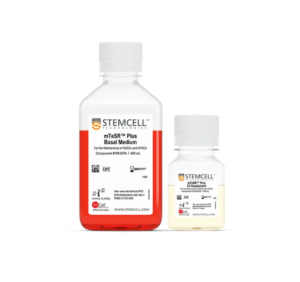 The formulation of ‘mTeSR™ Plus’ is optimised to support the growth and pluripotency of human pluripotent stem cells. It typically contains a variety of components, including growth factors, cytokines, and other essential nutrients. It is designed to provide a more stable and consistent environment for the maintenance of pluripotent stem cells. The medium aims to reduce variability between different lots, contributing to more reproducible experimental results. It is formulated to support high cell viability, efficient cell expansion, and maintenance of pluripotency.
Researchers use ‘mTeSR™ Plus’ in the routine culture of human pluripotent stem cells. It is commonly employed in laboratories conducting stem cell research, regenerative medicine, and drug discovery. It is suitable for use with various culture vessels and systems commonly used in stem cell research, including culture dishes, plates, and bioreactors.
It’s important to note that information about specific products and formulations may change over time, and new products may be introduced. For the most up-to-date and detailed information about ‘mTeSR™ Plus’ or any other STEMCELL Technologies product, it is recommended to refer to the official website of the company or contact them directly for the latest product specifications, protocols, and usage guidelines.